- Product
CO2 Laser
Contact Information
- +6012-959 5616
- sales@oripack.com.my
CO2 (DIKAI / Squid Ink)
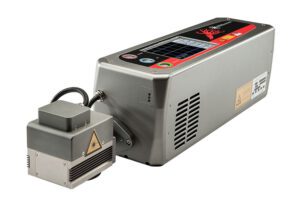
A CO2 Laser Coding System is a non-contact, permanent marking solution that uses a carbon dioxide gas mixture to generate a high-intensity infrared light beam. Operating typically at a wavelength of 10.6 μm, it creates marks by either vaporizing the surface material (engraving) or causing a chemical color change. It is primarily designed for high-speed production lines marking on non-metallic substrates like paper, cardboard, glass, and plastics.
Key Features & Design
- Modular Architecture: Modern systems often feature a “split-head” or modular design, allowing the laser source to be separated from the marking head for easier integration into tight production spaces.
- High-Speed Galvo Scanners: Uses precision mirrors (galvanometers) to steer the beam, enabling marking speeds of up to 2,000 characters per second or line speeds exceeding 150 m/min.
- Substrate Versatility: Highly effective on organic materials.
- Paper/Cardboard: Ablates the top layer for high contrast.
- PET/Plastics: Engraves or creates a frosted effect.
- Glass: Micro-cracks the surface for a permanent etch.
- Ruggedized Build: Typically rated at IP54 or IP65, protecting the internal optics from dust and moisture in harsh industrial environments (e.g., beverage bottling or food processing).
- Smart Software Control: Intuitive touchscreen interfaces (HMI) allow for “on-the-fly” message changes, serialization, and barcode generation without stopping the line.
Operational Efficiency
- Continuous Operation: Unlike inkjet printers, there are no nozzles to clog or ink reservoirs to refill, resulting in 99.9% uptime.
- Reduced Maintenance: The system is virtually maintenance-free, requiring only occasional lens cleaning and air filter changes.
- Clean Technology: Zero mess from ink spills or solvent odors, which is critical for sterile environments like pharmaceutical and food packaging.
- Seamless Integration: Compact footprints and flexible mounting brackets allow the laser to be mounted in any orientation (horizontal, vertical, or angled).
Cost Benefits
The CO2 laser is often cited for its Low Total Cost of Ownership (TCO):
- Consumables: Zero
- Labor: Minimal (Occasional Lens Wipe)
- Downtime: Negligible
- Mark Life: Permanent (Indelible)